The Corinthian Codex
Psychological and metabolic thriller - blending rigid scientific accuracy with mystical, serialized story. A Mediterranean Diet Series where every meal is a story, and every story feeds something.

For anyone who has ever stood at a stove and felt, without knowing why, that they were not cooking alone.
Episode One
The Jar That Never Emptied
I. The Curve of Coast
The complex sat on a curve of the Peloponnesian coast that had been eating the Mediterranean way for three thousand years before anyone invented the word “diet.”
From the road, it looked modest: twenty whitewashed bungalows arranged in a loose semicircle, the open end of which faced the sea like a cupped hand catching light. A central kitchen with a wood-fired oven that had not gone cold in thirty-seven years. A garden so densely planted with oregano, rosemary, wild thyme, and lemon verbena that the wind coming down from the hills always arrived smelling of a spice rack — or, depending on your state of mind, of a very old apothecary.
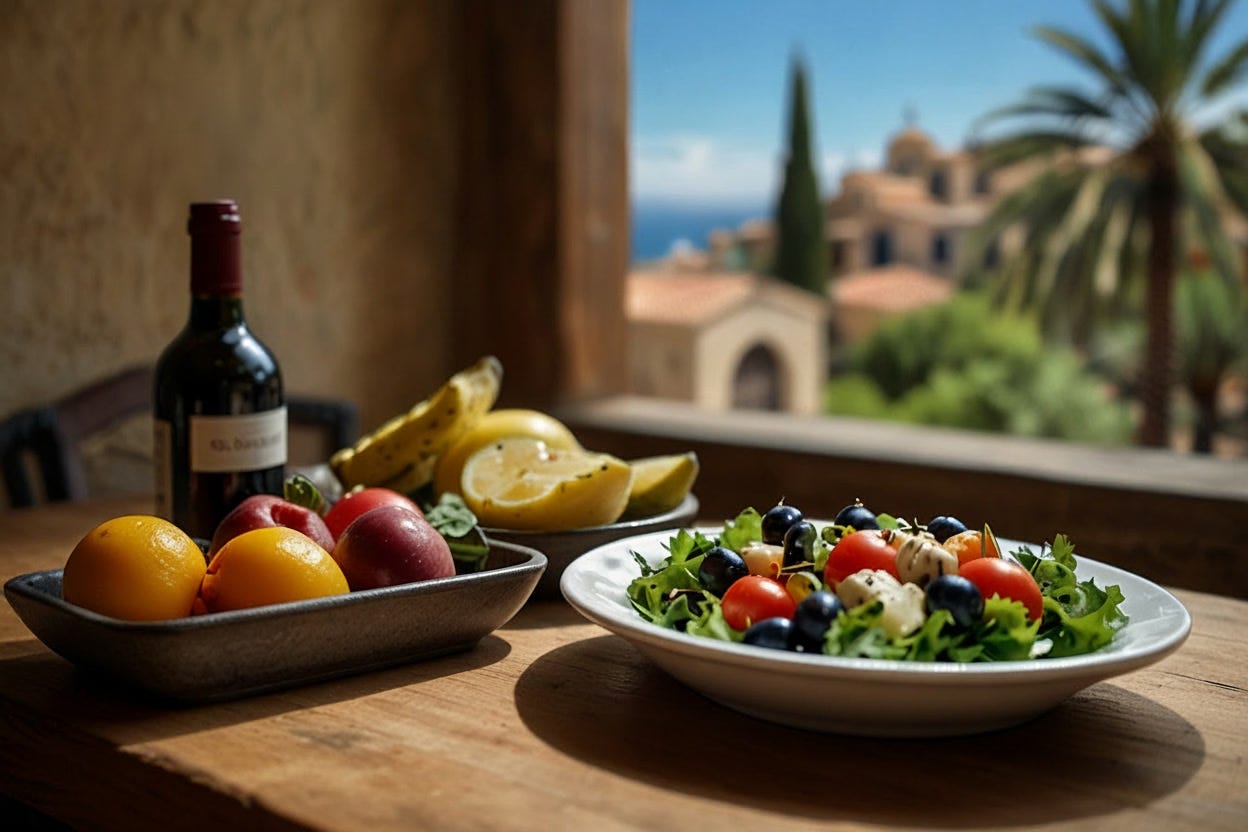
And a long, shaded terrace, its limestone floor worn smooth by decades of morning feet, where guests ate breakfast each day at precisely nine o’clock. Breakfast was always the same, give or take the season: fresh tomatoes halved and drizzled with oil, a wedge of feta that the owner’s supplier drove down from a mountain village in Epirus every Thursday, thick slices of sourdough whose crust shattered like fine porcelain, and coffee brewed in a brass briki over a low flame until it foamed exactly twice without boiling over.
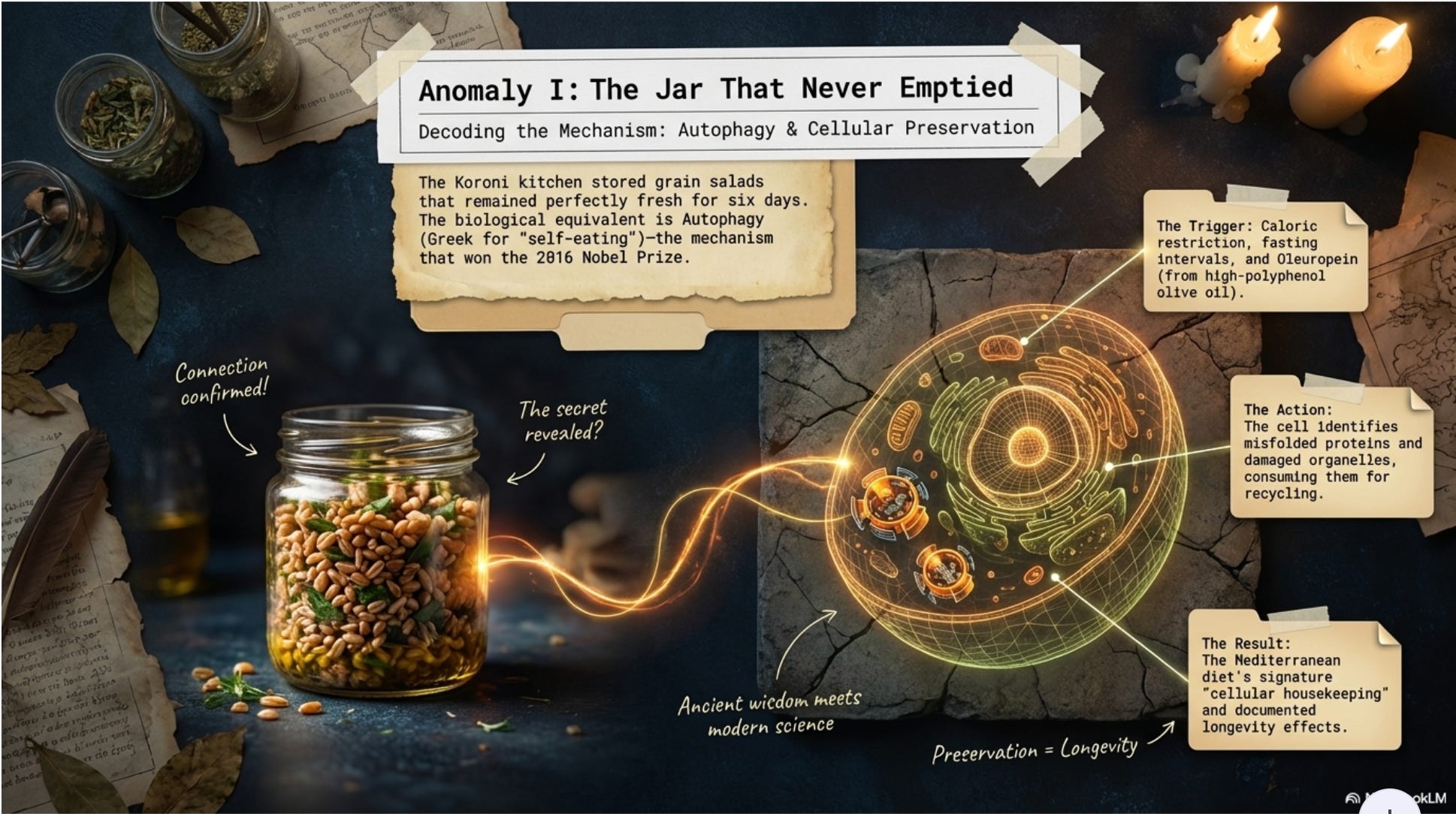
The olive oil came from a cracked ceramic jug that had belonged to the owner’s great-grandmother. It was replenished each morning and served at every meal. No one knew how old the jug really was. When guests asked, the owner smiled and said, “It predates the question.”
The Koroni Mediterranean Life Resort was not a hotel. Its brochure — which existed only in print, on thick cream paper, and was mailed to a curated list of health practitioners across the European continent — described it as “a residential environment for the sustainable reformation of metabolic habit.” Which was a polished way of saying: a machine for converting stressed, overweight, sleep-deprived Northern Europeans into calmer, leaner, longer-lived versions of themselves.
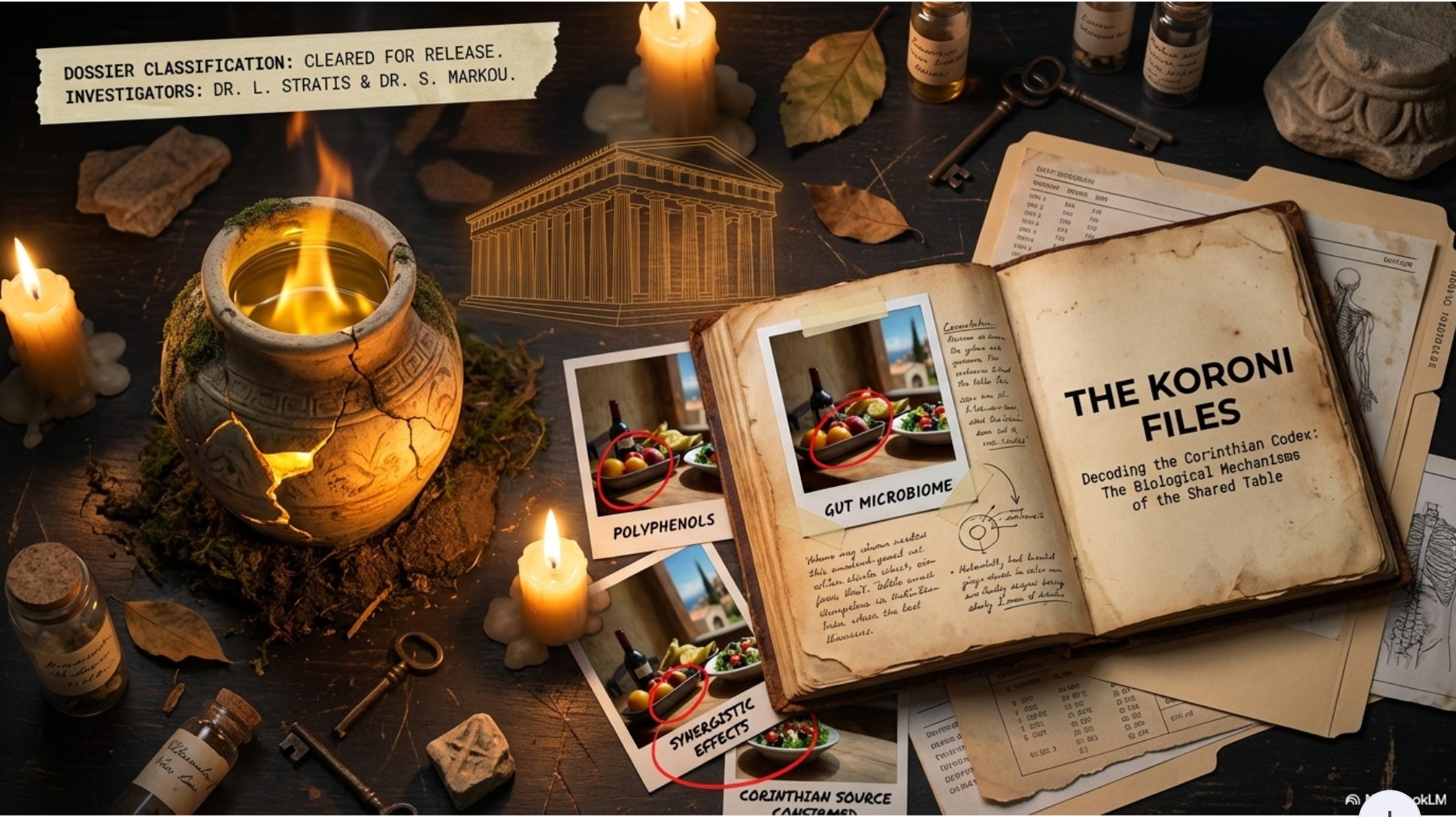
Seven-day packages, minimum. Three meals per day are cooked entirely from the principles of the traditional Mediterranean dietary pattern. Morning hikes to a Byzantine ruin on the hill above the estate, where a crumbled chapel still held fragments of mosaic floor — fish and grapevines intertwined. Evening lectures with titles like “Polyphenols and the Senescent Cell” and “Fermentation as Medicine” and, once a month, an intimate seminar the owner called “Why Your Grandmother Was Right.”
It worked. The evidence was not anecdotal. The resort had been the subject of three peer-reviewed follow-up studies, the most recent of which tracked eighty-four former guests over four years and found statistically significant reductions in fasting glucose, CRP levels, waist-to-hip ratio, and self-reported sleep disturbance. The results had been presented at a conference in Lyon in the autumn, and a researcher from Athens had stood at the podium and said, with barely contained excitement, “We may be looking at the highest-compliance Mediterranean diet intervention ever documented in an outpatient setting.”
Dr. Lena Stratis, seated in the third row with a glass of middling conference wine, had felt a flush of professional satisfaction so intense it was almost physical.
She had referred forty-three patients to Koroni in five years. She had never visited herself.
Until now.
Athens. Six weeks earlier.
The letter arrived on a Tuesday, between a pharmaceutical circular and a reminder about her car insurance. It had no return address. The envelope was a soft, cream-colored stock that felt faintly rough between the fingers, as if the paper had been made by hand and not entirely smoothed. The ink — actual ink, from an actual nib — had dried a deep brown rather than black.
Three lines:
Your patients are lying. They eat the diet. They do not live longer.
Come see why.
She had sat with it for a long time. Then she had gone back to her data.
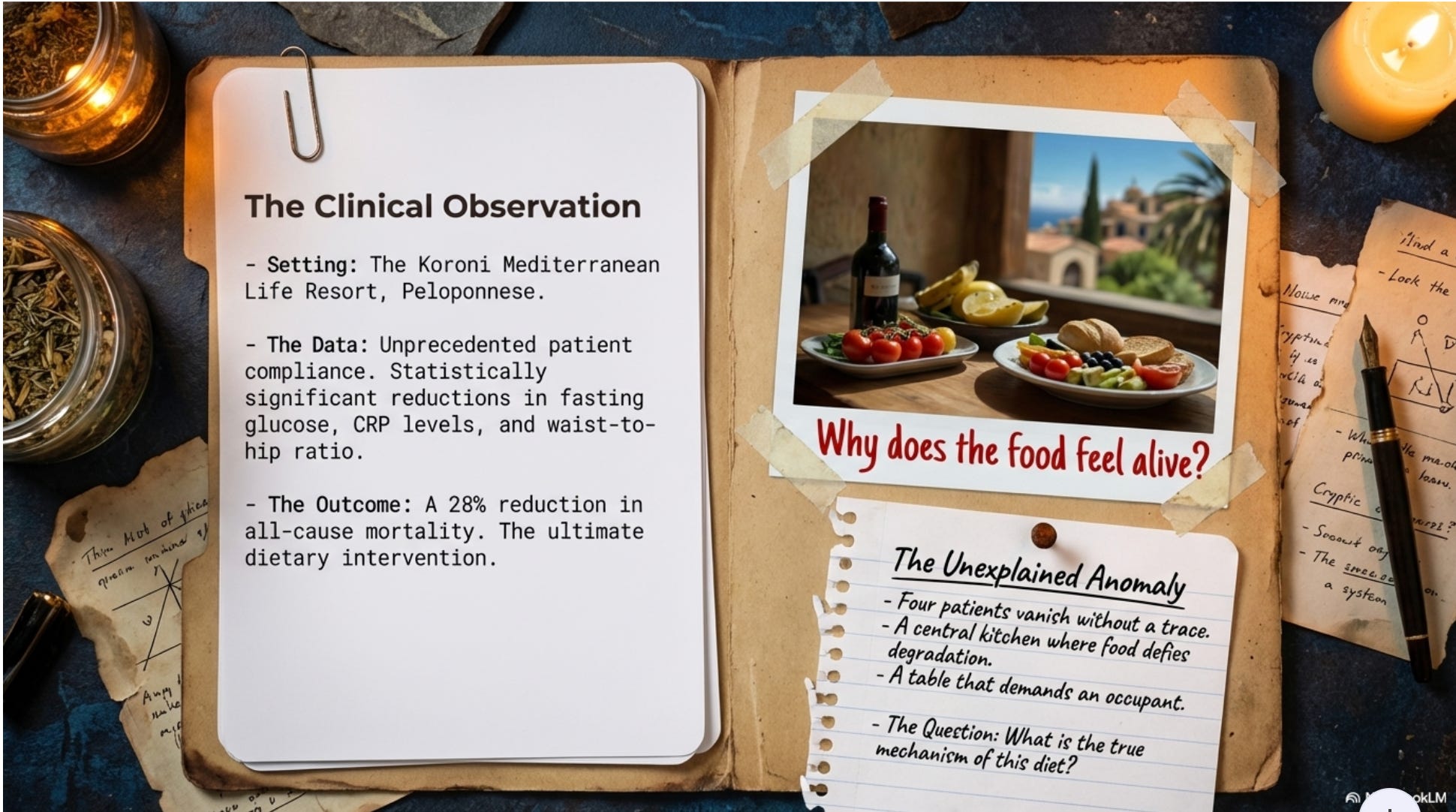
The mortality hazard ratios held. The adherence-adjusted analyses held. Every sensitivity test she ran returned the same result: patients who had stayed at Koroni and maintained Mediterranean diet adherence for twelve months or more showed a 28% reduction in all-cause mortality relative to matched controls. The confidence intervals were tight. The p-values were not nudging against the threshold — they were comfortably inside it.
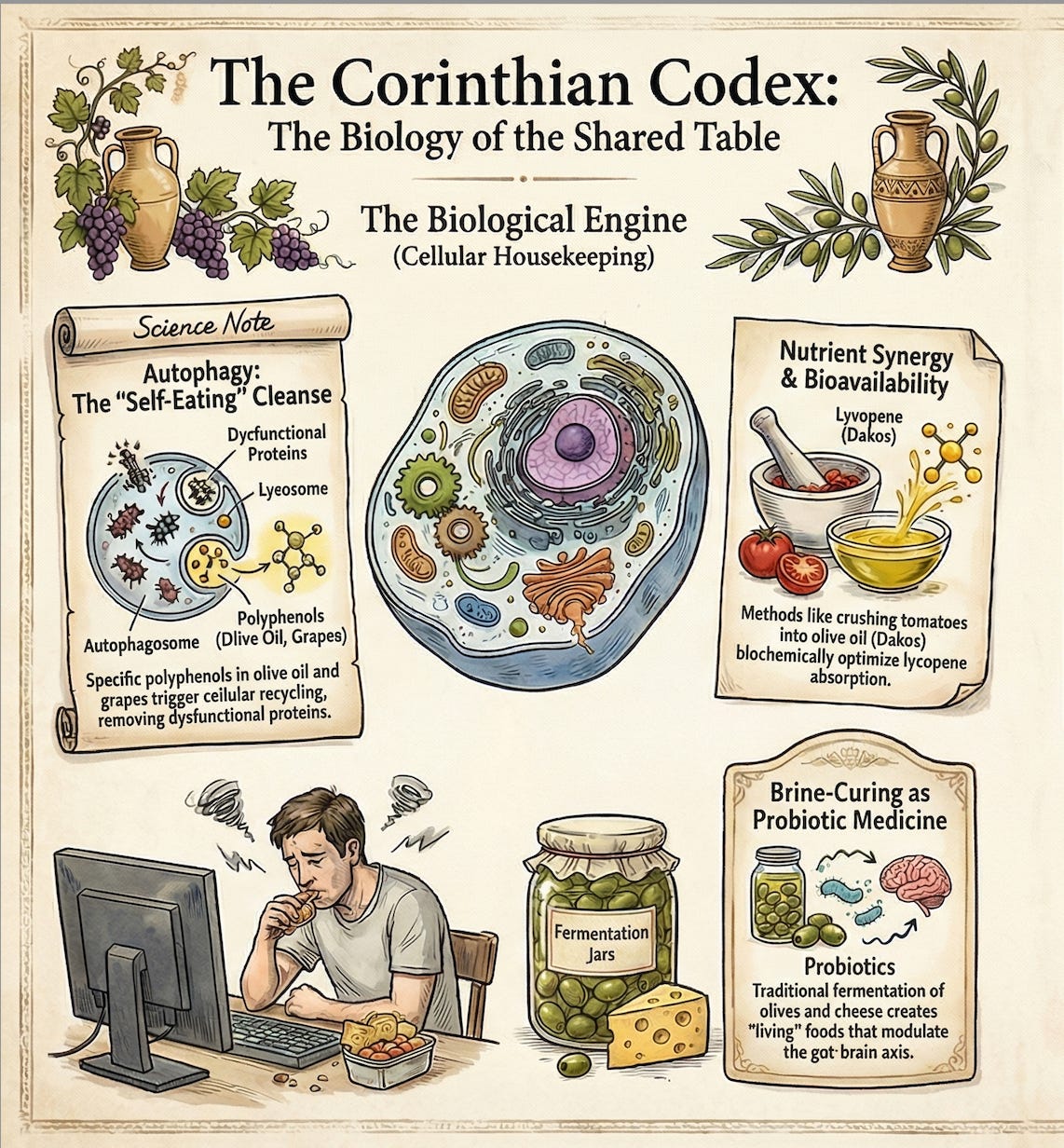
The Mediterranean diet worked. It had always worked. Its benefits were among the most replicated findings in nutritional epidemiology. Cohort after cohort, decade after decade, the olive oil and the legumes and the fish and the wine and the long unhurried evenings at the table kept showing up in the data, obstinate and persuasive as a grandmother with a ladle.
And yet.
Three of her patients had disappeared in the previous eighteen months. Not died — disappeared. Eleni Vouros, sixty-two, retired chemistry professor, meticulous adherent, no psychiatric history. Kostas Papadimitriou, fifty-five, accountant, had sent Lena a card at Christmas from Koroni saying the food was extraordinary and that he felt fifteen years younger. And a third: Anna Georgiou, forty-nine, the one whose file Lena kept returning to, because Anna had sent six months of dietary logs and they were perfect. Perfect in the way that made Lena slightly disbelieving, because real people, even motivated real people, do not maintain perfect dietary logs for six months
The police had called it a coincidence. Three adults, of their own volition, leave their lives. It happened. People walked away from themselves sometimes.
Lena had read the files again. She had read the Koroni brochure again. She had held the strange letter and smelled it — it smelled, improbably, of fresh figs — and then she had booked a room.
She told herself it was a research opportunity. She brought her calorimeter.
Episodes 1,2,3,4,5 - Euro 15 emailing to liudmila.books@gmail.com
Available co-brand licence: with your logo, QR code, photos, and additional pages (welcome, last page)
and white-label licence.

If you enjoy my free stories, you could also support my work with a one-time donation to my PayPal account.

ARE YOU INTERESTED IN OTHER STORIES?
You can find MY EBOOKS HERE